
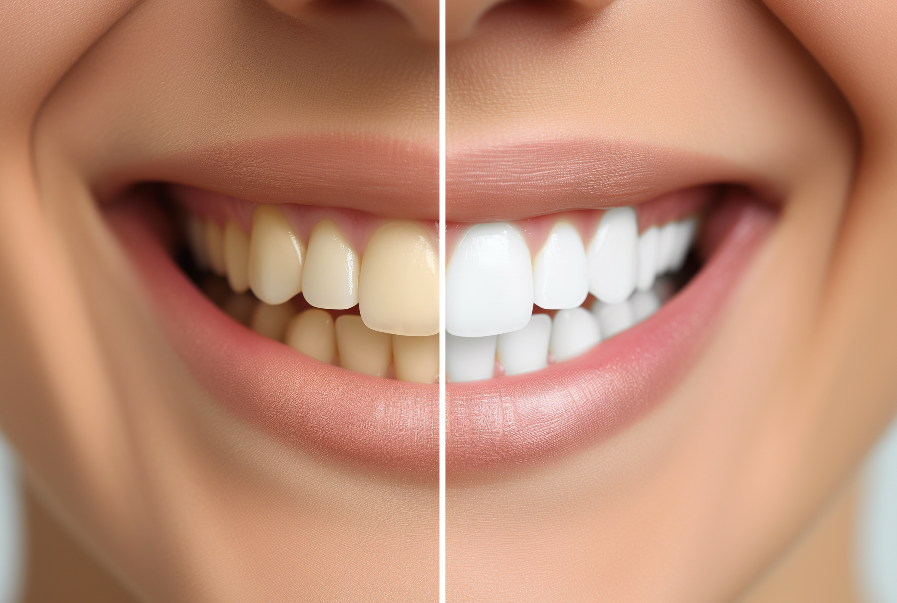
If you’ve ever looked in the mirror and wondered why your teeth don’t look as bright as they used to, you’re definitely not alone. Tooth discoloration is incredibly common, and it doesn’t always mean your oral hygiene routine is lacking. In fact, yellowing can happen for a variety of reasons—some related to lifestyle, others to natural changes in your teeth over time.
The good news is that once you understand what’s causing the discoloration, there are plenty of ways to address it and restore a brighter, more confident smile.
Common Causes of Yellow Teeth
One of the most frequent causes of yellow teeth is staining from foods and drinks. Coffee, tea, red wine, and dark-colored berries can gradually leave pigments behind on enamel. Even healthy foods like tomato-based sauces can contribute over time. Tobacco use is another major factor, as nicotine and tar are known to cause deep, persistent staining.
But discoloration isn’t always external. As we age, the outer layer of enamel naturally wears down, revealing the dentin underneath, which has a more yellowish tone. This is a normal part of aging, but it can make teeth appear less bright even if your oral hygiene is solid.
Poor oral hygiene can also contribute to yellowing. When plaque and tartar build up, they can create a dull, discolored appearance. Inconsistent brushing and flossing habits allow surface stains to accumulate more easily over time.
Certain medications and medical treatments can also impact tooth color. For example, some antibiotics or treatments during early childhood development can affect enamel formation. Genetics may also play a role in how white or yellow your natural teeth appear.
How to Address and Prevent Discoloration
Improving your daily oral care routine is one of the simplest and most effective ways to prevent yellowing. Brushing twice a day with a fluoride toothpaste and flossing daily helps reduce plaque buildup and surface stains. Antibacterial mouth rinses can also help keep your mouth clean and fresh.
Diet adjustments can make a noticeable difference as well. Limiting staining beverages like coffee and red wine, or rinsing your mouth with water after consuming them, can reduce long-term discoloration. Using a straw for darker drinks may also help minimize contact with teeth.
For more stubborn staining, whitening options can be highly effective. Over-the-counter whitening strips, whitening toothpaste, and professional treatments offered by dental providers can all help lift stains and brighten enamel.
It’s also important to maintain regular dental cleanings. Professional cleanings remove hardened plaque (tartar) that cannot be eliminated through brushing alone, helping restore a cleaner, brighter appearance.
When to Consider Professional Whitening
If discoloration persists despite good oral hygiene habits, professional whitening may be the most effective solution. Dental professionals can assess the type of staining you have and recommend treatments tailored to your needs, whether that involves in-office whitening or take-home systems.
Unlike at-home products, professional treatments are designed to target deeper stains while minimizing sensitivity, offering more noticeable and longer-lasting results.
Yellow teeth are common, but they’re also highly treatable once you understand the underlying cause. With consistent care, mindful habits, and the right whitening approach, most people can significantly improve the brightness of their smile.
A brighter smile often starts with small, consistent changes that add up over time.
About the Practice
Dr. Vason provides comprehensive preventive, cosmetic, and restorative dental care for patients seeking to improve and maintain their oral health. Dr. Vason and the team focus on patient-centered treatment plans, offering services such as professional cleanings, whitening solutions, and personalized dental care designed to support long-term oral wellness.
Call us at (404) 367-9799 or schedule your appointment online.