
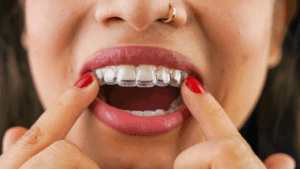
Straightening your smile with any orthodontic treatment requires a lot of time and money, but keeping your treatment on track with your projected timeline can help shorten the number of days to your final results. If you notice that your teeth aren’t moving despite wearing your aligners for 20 to 22 hours every day, you may need a little extra help from your dentist. Read on to learn why your teeth may not be tracking with clear aligners and what you can do to get them to keep shifting.
What Does “Tracking” Mean in Clear Aligner Treatment?
The term “tracking” throughout your clear aligner treatment will be used a lot, so it’s good to know what it means! When your dentist says, “clear aligner tracking” or “teeth tracking,” it’s just referring to whether your aligners are moving your teeth according to your estimated treatment plan. It’s important to remember that this process is gradual and doesn’t happen overnight, but if your dentist notices that your teeth aren’t moving at all or as swiftly as they should be, they might say something like, “Your teeth aren’t tracking.”
3 Reasons Why Your Aligners Could Not Be Tracking
There are several different reasons why your aligners may not be moving your teeth as efficiently as they should be, but ultimately, your dentist in Buckhead will be the person best-suited to telling you why. Here are three of the most common reasons why aligners don’t track for patients:
- Your body’s unique response to treatment. Your treatment plan will be created by an advanced digital treatment planning software using information input by your dentist. However, it cannot predict your body’s specific response to treatment, impacting your tracking.
- You aren’t meeting your 20 to 22-hour wear time each day. In order for your aligners to have their intended result, you should be wearing them for between 20 and 22 hours a day.
- The trays aren’t properly seated over your arch. Some people’s oral anatomy may make it so that the aligners need a little extra help to fit snugly over their teeth. Unless they’re completely seated over your arch, they might not be having their maximized impact.
What Can You Do to Get Your Aligner to Shift Your Teeth Better?
You’ll return to your dentist’s office every six to eight weeks for check-in visits to make sure your teeth are shifting as they should be. Depending on why your teeth aren’t tracking, your dentist may give you chewies, which are small foam tubes you bite on to make sure your aligners are firmly over your teeth. This is the most common reason for aligners that don’t track; however, other options, like putting daily reminders in your phone to track your wear time or extending your treatment plan based on your body’s response to your aligners may also be needed!
If your dentist lets you know that your teeth aren’t tracking at your SureSmile clear aligner check-in visit, there’s no need to worry! They will help you get the most out of your treatment and ensure you stay on-track with your timeline by providing you with helpful solutions. Just remember to trust the process!
About the Author
Dr. Carlisle Vason graduated in the top 12 percent of his class at the Dental College of Georgia at Augusta University and completed an Advanced Education in General Dentistry Residency following earning his dental degree. He has helped hundreds of patients transform their smiles with tailored cosmetic dental treatments, such as SureSmile clear aligner treatment, and he loves to see their reactions once they complete their journey. To schedule a consultation or learn more about clear aligners, visit Vason Family Dentistry of Buckhead’s website or call 404-367-9799.