
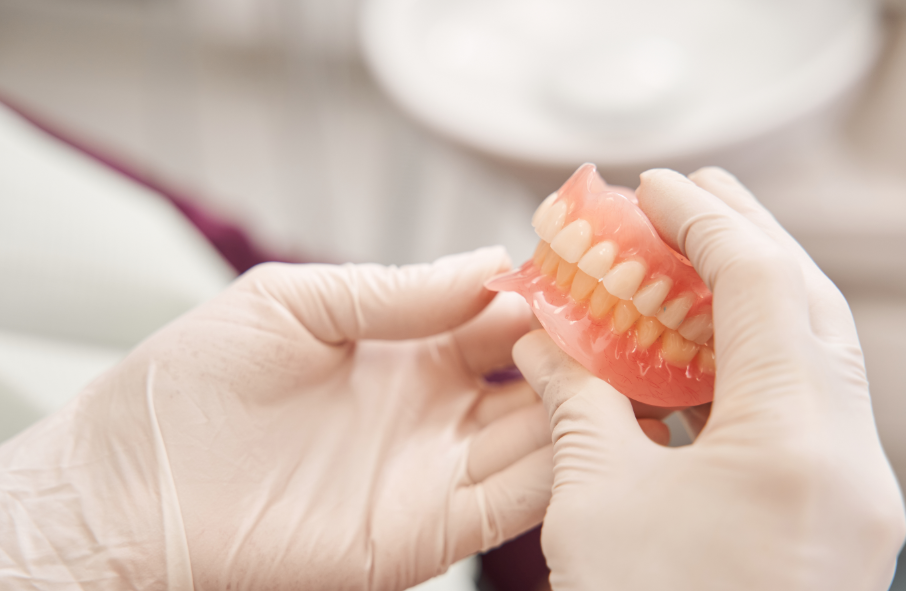
Food is about so much more than simply satisfying hunger. The aroma of your favorite meal, the texture of each bite, and the flavors you love all contribute to the enjoyment of eating. So, if you’ve recently started wearing dentures and noticed that food doesn’t taste quite the same, you may be wondering what’s going on.
Although dentures don’t necessarily affect everyone’s sense of taste, some people notice changes after getting them. Fortunately, there are ways to make meals more enjoyable and improve your experience with dentures. Let’s explore how dentures can influence taste and what you can do about it.
Why Might Dentures Affect Your Sense of Taste?
Your sense of taste comes from taste buds located primarily on your tongue, but other parts of your mouth also contribute to how you experience flavor. Your sense of smell plays a particularly important role, too.
When you receive new dentures, several changes may affect how you experience food.
Dentures May Cover Taste Receptors
Some upper dentures cover part of the roof of your mouth, or palate. This area contains sensory receptors that may contribute to your overall experience of flavor.
Although most taste buds are on your tongue, covering portions of the palate may change how certain flavors or temperatures are perceived. Some people may notice this more than others.
Changes in Saliva and Moisture
Wearing dentures can sometimes contribute to dry mouth or changes in saliva flow. Saliva helps dissolve food chemicals so they can interact with your taste receptors. If your mouth feels dry, you may notice that flavors seem less pronounced.
Certain medications, dehydration, and other health conditions can also contribute to dry mouth, so it’s worth discussing persistent symptoms with your dentist or healthcare provider.
Getting Used to a New Appliance
New dentures can feel bulky or unfamiliar, especially during the first few weeks. As you adjust, you may notice changes in how food feels in your mouth or how you chew.
These sensations can influence your overall eating experience, even if your actual taste buds are functioning normally.
Can Implant Dentures Help Improve Taste Sensation?
If you find that traditional dentures affect your enjoyment of food, implant dentures may be worth discussing with your dentist. Unlike conventional dentures, implant dentures are secured to dental implants, which are placed in the jawbone to provide stability.
One potential advantage of implant-supported dentures is that they may not need to cover as much of the roof of your mouth. Depending on your treatment plan, this can allow for a more natural feeling while eating and may help improve your experience of flavors and temperatures.
Implant dentures can also make chewing more comfortable and secure. However, they don’t guarantee that your sense of taste will return to exactly what it was before wearing dentures. Your dentist can help determine whether they’re a suitable option for your needs.
Tips for Enjoying Food With Dentures
If you’re adjusting to dentures or noticing changes in your sense of taste, a few simple habits may help:
- Stay hydrated: Drinking enough water can help combat dry mouth and support normal saliva production.
- Keep your dentures clean: Plaque and food buildup can contribute to unpleasant tastes and odors.
- Experiment with flavors: Try using fresh herbs, mild spices, or different food textures to make meals more enjoyable.
- Eat slowly: Taking your time can help you adjust to chewing and become more comfortable with your dentures.
- Discuss discomfort: If your dentures feel loose, bulky, or uncomfortable, your dentist may be able to adjust them.
If changes in taste persist or seem unrelated to your dentures, it’s worth discussing them with your dentist. Medications, dry mouth, infections, and other health concerns can also affect taste sensation.
Enjoying Your Smile and Your Meals
Dentures can restore your ability to smile, speak, and eat, but adjusting to them may take some time. If changes in taste are affecting your enjoyment of food, you don’t have to simply put up with them.
Your dentist can help you explore ways to improve comfort, function, and your overall experience with dentures.
A comfortable smile should make mealtimes more enjoyable, too!
About the Practice
Vason Family Dentistry of Buckhead is an Atlanta, Georgia, dental practice led by Dr. Carlisle Vason. Dr. Vason earned his Doctor of Dental Medicine degree from the Dental College of Georgia at Augusta University and completed advanced training in comprehensive care, implant placement, and oral and periodontal surgery. He is committed to providing personalized dental care that supports the health, function, and appearance of each patient’s smile.
Call us at (404) 367-9799 or schedule your appointment online.